
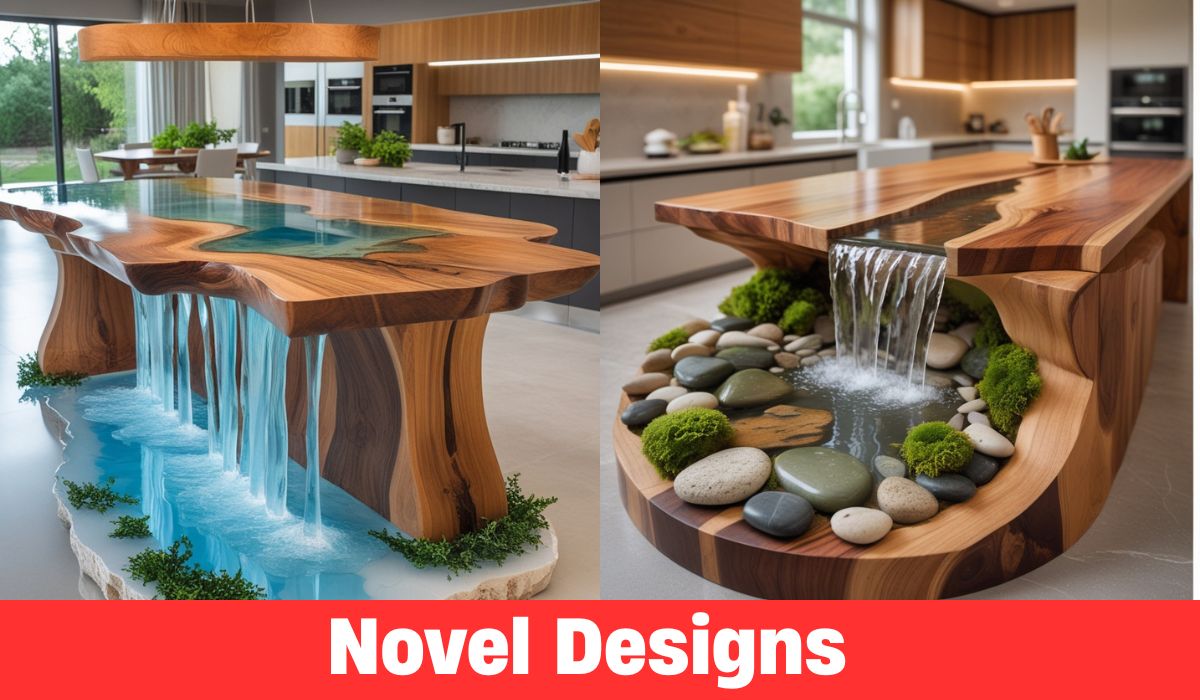
A Waterfall Wood Table has become one of the most sought-after pieces in contemporary interior design. With its smooth edges, seamless grain flow, and sculptural presence, this table style adds both elegance and artistic value to any living space. Whether used as a coffee table, dining table, side table, or office desk, its distinctive waterfall effect creates an impression of fluidity and craftsmanship. In this article, we explore everything you need to know about waterfall wood tables—from design features and materials to styling tips and buying considerations.
1. What Makes a Waterfall Wood Table Unique?
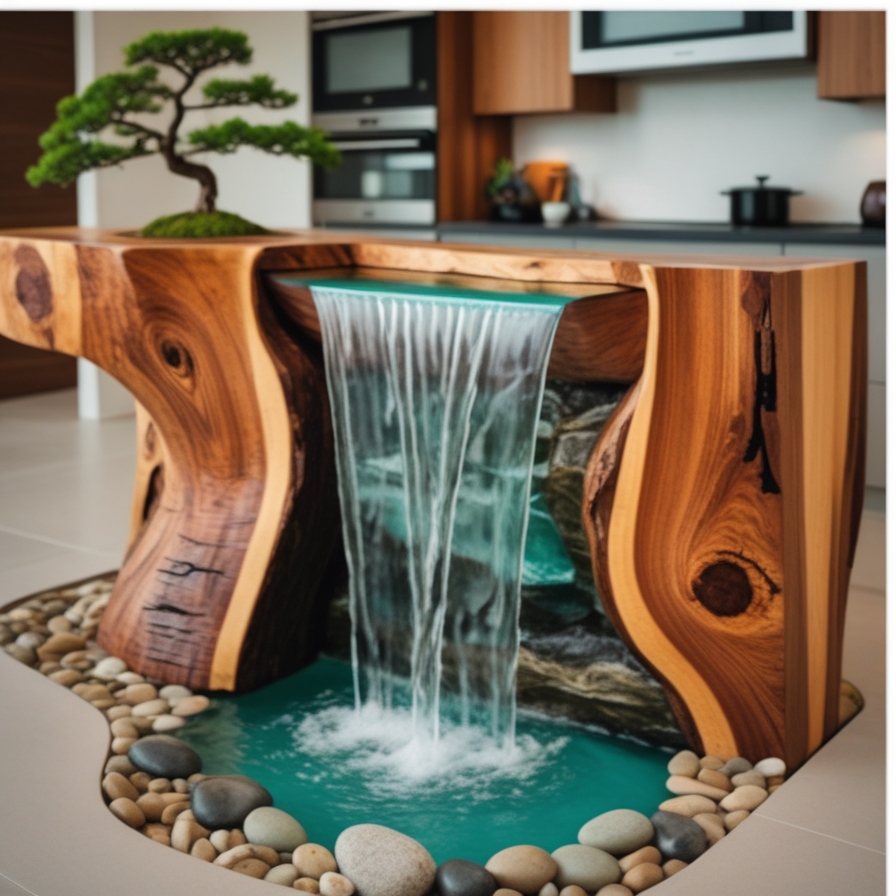
A Waterfall Wood Table is defined by its signature design: the tabletop bends at a 90-degree angle and flows down to the floor, resembling a waterfall. This creates a continuous grain pattern that highlights the beauty of the wood and craftsmanship.
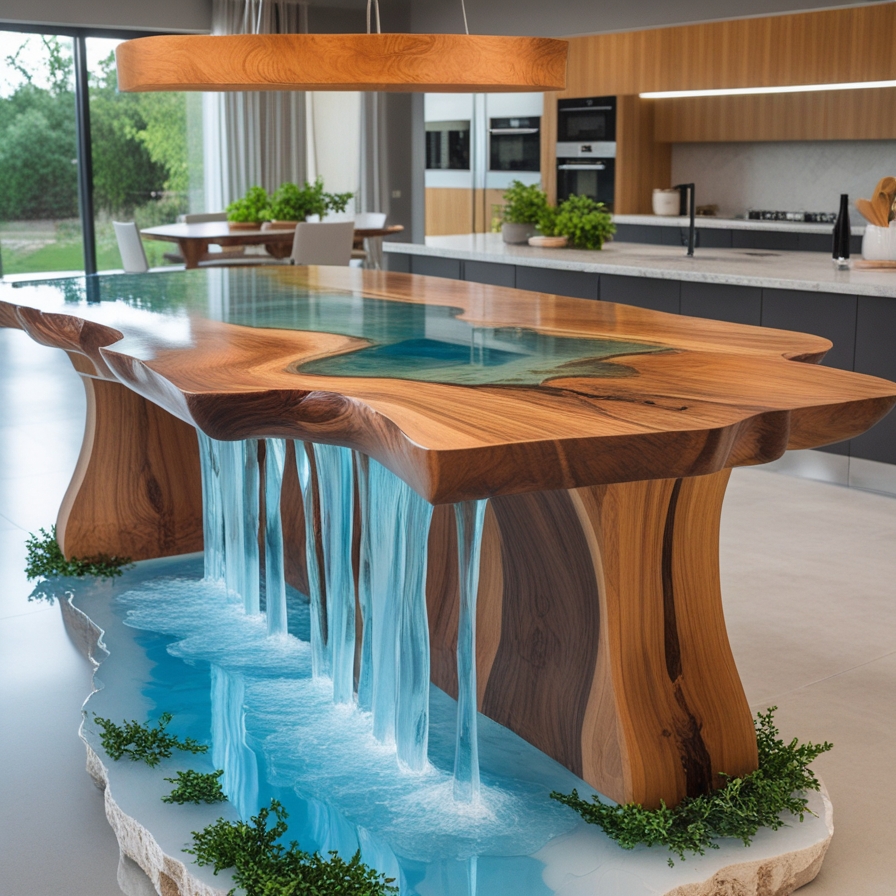
1.1 Seamless Grain Flow
One of the standout features is the continuous wood grain that runs across the tabletop and down the sides. This seamless flow enhances the organic look of the piece and showcases the richness and texture of natural wood.
1.2 Minimalist Yet Sculptural Form
The clean lines and modern silhouette give the table a minimalist feel, yet its bold structure makes it a sculptural focal point in any room.
1.3 Versatility in Use
From living rooms to offices, waterfall wood tables fit well in various interior design styles including modern, Scandinavian, boho, rustic, and even luxury industrial.
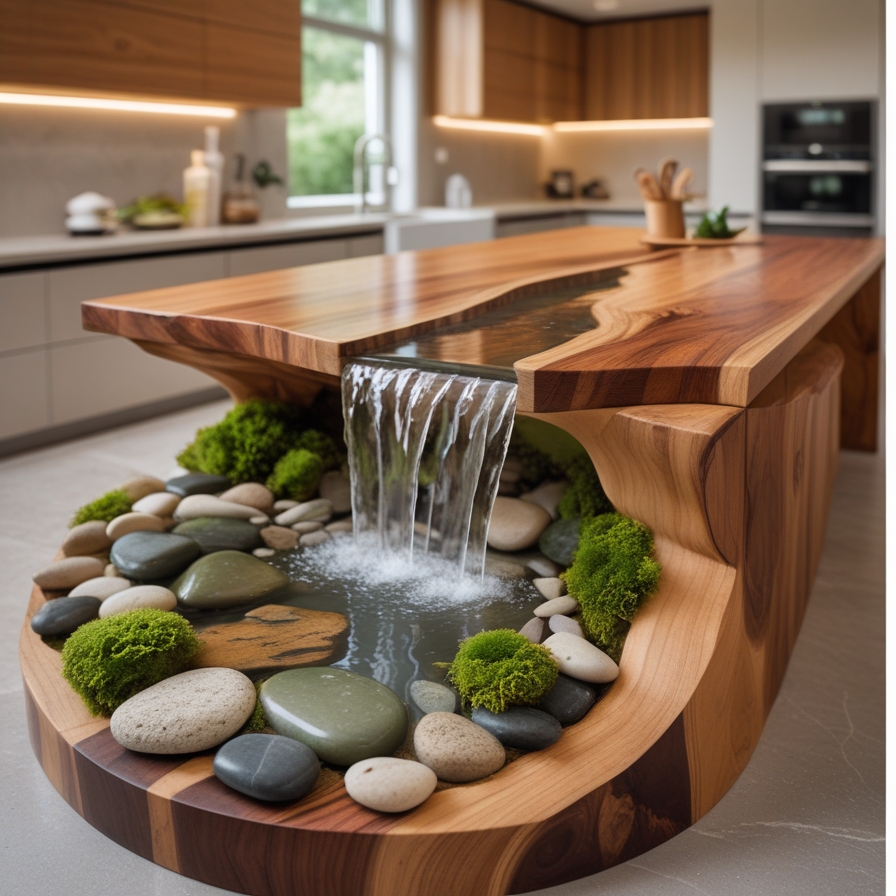
2. Popular Materials Used in Waterfall Wood Tables
The material plays a crucial role in determining the durability, appearance, and price of a Waterfall Wood Table. Here are some commonly used woods and their characteristics.
2.1 Solid Hardwood
Hardwoods such as walnut, oak, maple, and teak are preferred due to their strength and long-lasting quality. They maintain shape well and age beautifully over time.
2.2 Live Edge Slabs
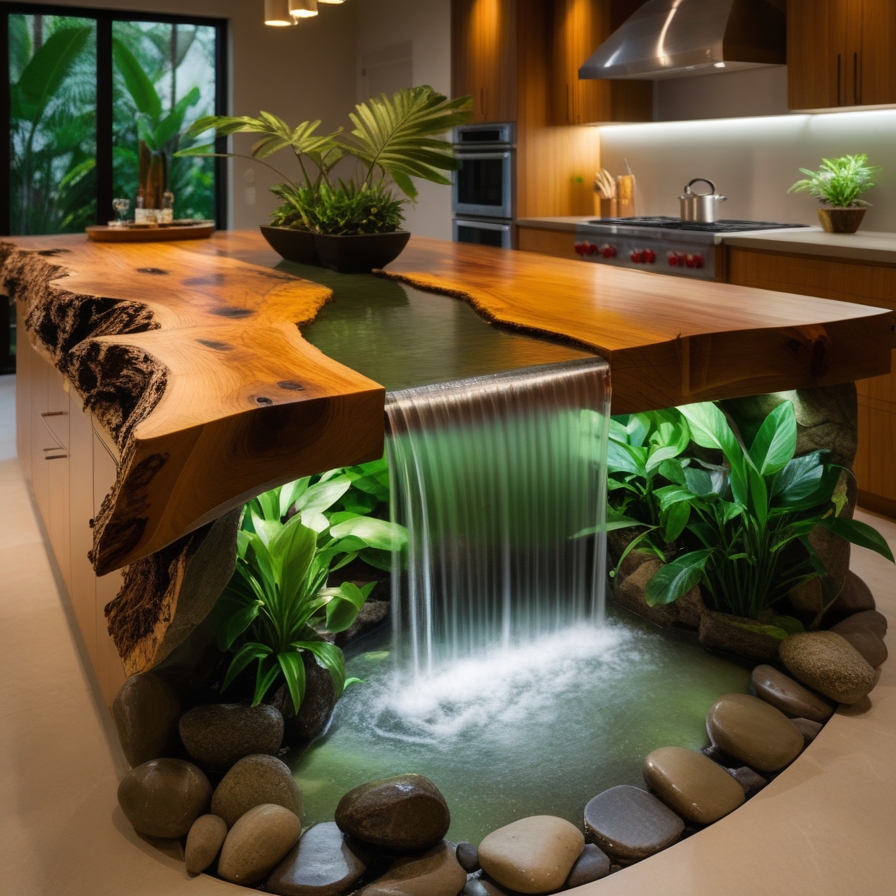
Live edge waterfall tables preserve the natural contour of the tree, giving a raw, organic aesthetic. This makes each piece one-of-a-kind.
2.3 Engineered Wood Options
Engineered materials like plywood, veneer, or MDF with hardwood lamination offer a more affordable alternative while still achieving the waterfall look.
3. Benefits of Choosing a Waterfall Wood Table
Investing in a Waterfall Wood Table goes beyond just aesthetics. It offers practical and long-term advantages, making it an excellent furniture choice.
3.1 Durability and Strength
Solid wood tables are highly durable, resistant to wear, and capable of lasting decades with proper care. Their sturdy construction makes them suitable for both residential and commercial use.
3.2 Timeless Aesthetic Appeal
The minimalist design ensures the table remains stylish for years, making it a timeless addition to modern interiors.
3.3 Enhances Room Ambience
The striking design naturally draws attention and enhances the overall atmosphere of your living space, serving as a statement piece.
4. How to Style a Waterfall Wood Table in Your Home
A Waterfall Wood Table can elevate any room when styled correctly. Below are helpful tips to maximize its visual impact.
4.1 Pair with Neutral or Earthy Tones
Natural wood tones blend beautifully with beige, cream, white, or soft grey walls. Adding textured accessories such as ceramic vases or woven baskets enhances the organic vibe.
4.2 Combine with Metal or Glass Accents
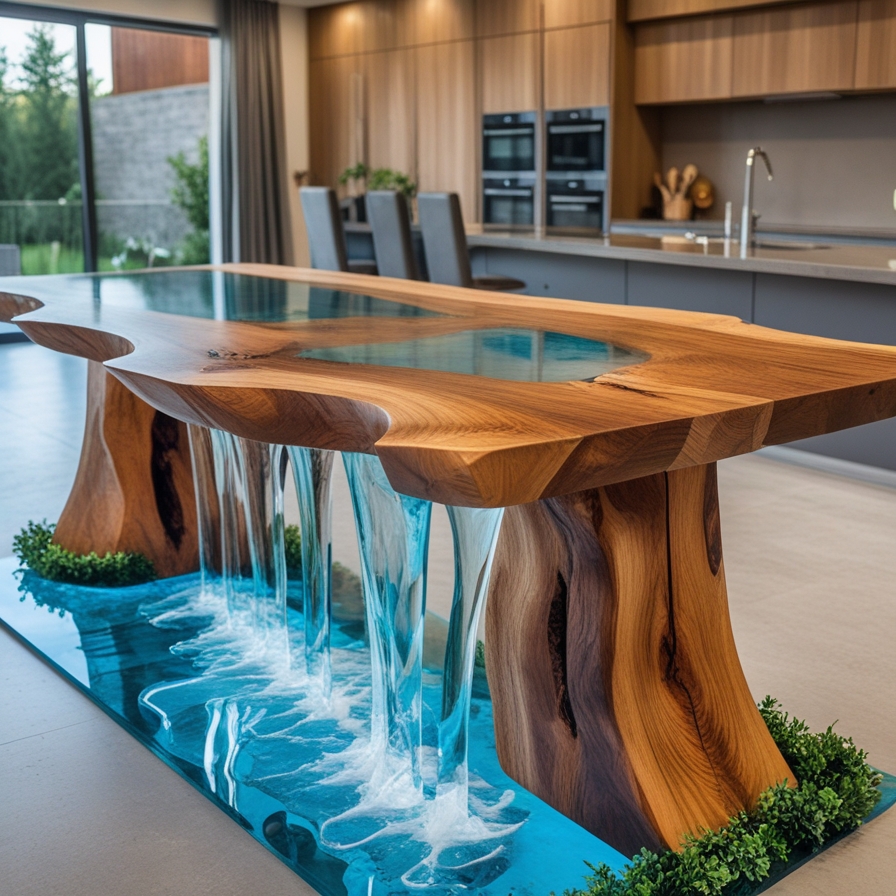
Brushed gold lamps, glass décor, or black metal accents create a sophisticated contrast and modern appeal.
4.3 Choose Complementary Furniture
Pair the table with modern sofas, minimalistic chairs, or soft-fabric pieces to balance the boldness of the waterfall design.
5. Buying Guide: Choosing the Right Waterfall Wood Table
Before purchasing a Waterfall Wood Table, consider important factors such as size, finish, and craftsmanship to ensure it fits your needs and interior style.
5.1 Consider the Wood Type
Hardwoods like walnut or oak provide durability and a premium look, while more affordable engineered woods are suitable for budget-friendly buyers.
5.2 Check Craftsmanship Quality
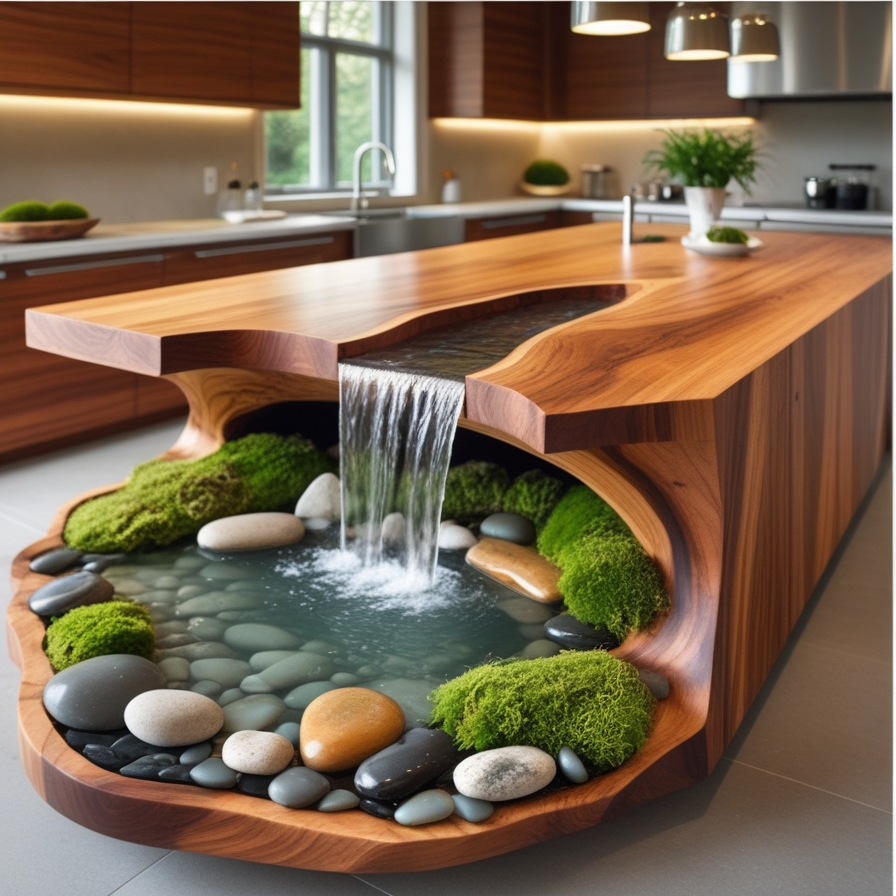
Examine the grain alignment, joinery, and finishing. A true waterfall table has a perfectly matched grain pattern where the tabletop meets the sides.
5.3 Measure Your Space Carefully
Ensure the table dimensions complement your room layout—especially for dining or coffee table setups.
Conclusion
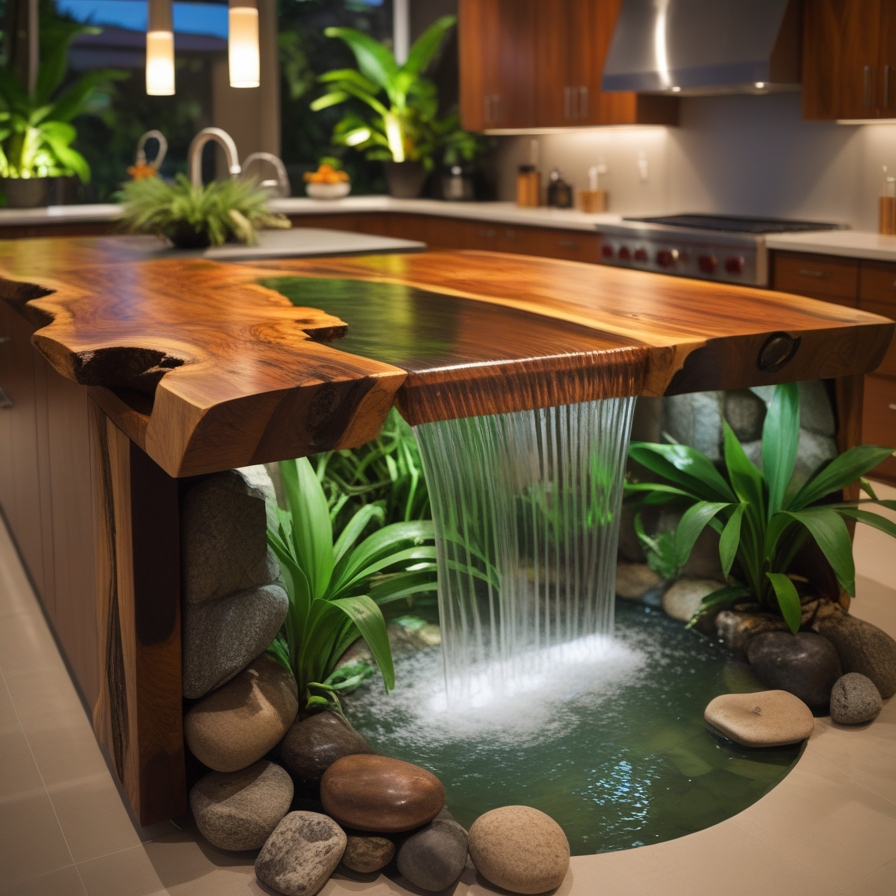
A Waterfall Wood Table is more than just furniture—it is a work of art. With its seamless design, natural wood beauty, and sculptural presence, it elevates any interior space. Whether chosen for its durability, aesthetic appeal, or timeless design, this piece is a worthy investment for homeowners seeking to blend elegance with modern craftsmanship.
If you’re looking for a statement piece that transforms your living room, dining area, or office, a waterfall wood table is the perfect choice. It captures attention, enhances the space, and showcases the beauty of nature in the most refined way.